

Blog
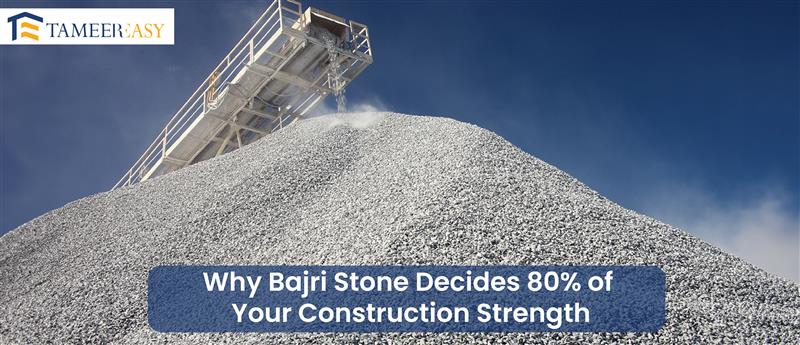
Why Bajri Stone Decides 80% of Your Construction Strength
Most construction failures in Pakistan don’t start with cement or design flaws—they start with poor bajri stone selection. Whether it’s cracks in walls, weak slabs, or uneven flooring, the root cause is often low-quality aggregate. If you choose the right bajri from the start, you eliminate a major portion of structural risk and long-term repair costs.
This guide gives you a clear, practical understanding of how bajri stone directly impacts strength, durability, and cost—and how to make the smartest choice.
What Makes Bajri Stone “High Quality”?
Before anything else, here’s what actually defines good bajri stone:
- Hard and durable (doesn’t break easily under pressure)
- Angular shape (better bonding with cement)
- Clean surface (free from dust and clay)
- Consistent size distribution
If your aggregate checks all four boxes, your concrete automatically becomes stronger and more reliable.
The Hidden Problem in Pakistan’s Construction Market
Many builders and homeowners unknowingly compromise on bajri stone due to:
- Confusion around fluctuating bajri price in pakistan
- Lack of clarity about actual bajri rate in pakistan
- Suppliers mixing dust or low-grade material
- Misleading labeling like 1 1 2 crushed stone without standardization
This leads to weak concrete, higher cement consumption, and eventually structural damage.
How Bajri Stone Impacts Structural Strength
Concrete is only as strong as its aggregate. Here’s how bajri stone plays a critical role:
- It provides bulk strength (70–80% of concrete volume)
- It controls shrinkage and cracking
- It improves load-bearing capacity
- It enhances durability against weather
Even premium cement cannot compensate for poor aggregate quality.
Step-by-Step: How to Choose the Right Bajri Stone
1. Match Bajri Type with Application
Different uses require different forms of bajri stone:
- Structural concrete: medium-sized aggregate
- Decorative surfaces like a crushed stone floor: finer particles
- Heavy-duty construction: larger and denser aggregate
Using the wrong type reduces efficiency and increases costs.
2. Understand Aggregate Sizes
You’ll commonly find these categories in the market:
- Fine aggregates (for finishing)
- Medium aggregates (general construction)
- Coarse aggregates like 3 4 crushed stone for heavy loads
Each size affects strength, finishing, and cement usage differently.
3. Identify Real Crushed Stone vs Mixed Material
Not all aggregates are pure. Some sellers mix gravel and crushed stone, which reduces bonding strength.
Always prefer properly processed crushed stone because its angular edges lock better within concrete.
4. Check Surface Cleanliness
Dirty bajri stone weakens the bond with cement.
Quick test:
Take a handful and rub it—if it leaves excessive dust, quality is compromised.
5. Evaluate Supplier Reliability
Searching for crushed stone suppliers near me may give you many options, but reliability matters more than proximity.
Look for suppliers who provide:
- Consistent quality
- Transparent pricing
- Timely delivery
6. Understand Cost vs Value
Cheap bajri stone often increases overall cost due to:
- More cement required
- Repairs and rework
- Reduced lifespan of structure
That’s why understanding bajri rate in pakistan is important—but choosing purely on price is risky. Check the TameerEasy store updated prices!
Types of Bajri Stone Used in Pakistan
Here are the most commonly used variations:
- Standard construction aggregate
- Fine aggregate for finishing
- Coarse aggregate like 1 1 2 crushed stone
- Mixed gravel and crushed stone for low-budget projects
Each type serves a different purpose, and selecting the wrong one leads to performance issues.
Why Size Consistency Matters More Than You Think
One overlooked factor in bajri stone is uniformity.
If sizes are inconsistent:
- Concrete becomes uneven
- Voids increase inside the mix
- Strength decreases significantly
Consistent grading ensures better compaction and stronger bonding.
The Cost of Choosing the Wrong Bajri
Ignoring quality leads to:
- Cracks in slabs within months
- Weak roof structures
- Poor finishing results
- Higher long-term maintenance
In Pakistan’s climate, where temperature variations are extreme, poor aggregate quality accelerates damage.
Where to Source Reliable Bajri Stone in Pakistan
To avoid common market issues, always choose trusted platforms. One reliable option is TameerEasy online construction material store, which focuses on quality consistency and transparent sourcing.
Conclusion
Your construction project’s success largely depends on one decision: selecting the right bajri stone. It influences strength, durability, cost, and long-term performance.
Instead of focusing only on price, prioritize quality, size consistency, and supplier reliability. A small improvement in aggregate quality can lead to a massive improvement in structural life.
Before you finalize your material purchase, take a moment to evaluate your bajri stone quality. Choosing the right aggregate today can save you from major structural problems tomorrow. Make informed decisions, compare suppliers, and invest in long-term strength—not short-term savings.
FAQs
What is the best size of bajri stone for concrete?
Medium-sized aggregates (around 10mm–20mm) are ideal for most structural concrete applications.
Does bajri stone quality really affect construction strength?
Yes, it contributes to the majority of concrete strength and durability.
How can I check bajri stone quality at home?
Check for cleanliness, uniform size, and hardness. Avoid dusty or flaky material.
Is crushed stone better than natural gravel?
Yes, crushed stone provides better bonding due to its angular shape.
Why does bajri price vary in Pakistan?
Prices depend on location, transportation, size, and overall material quality.