

Blog
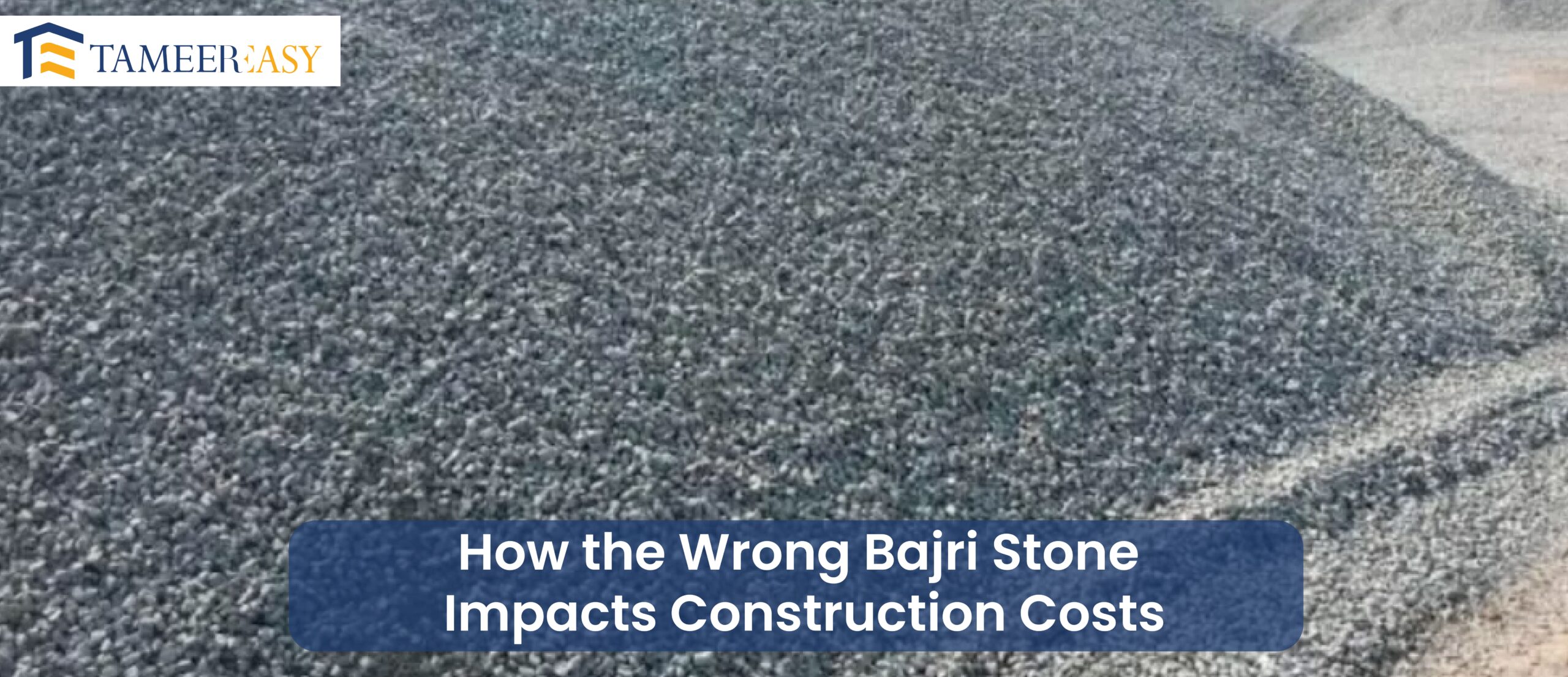
How the Wrong Bajri Stone Impacts Construction Costs
Majority believe that construction is costly due to cement, steel or labor. The reality is that there is an unspoken fact that makes the cost of projects even greater at their conception; that is bad quality bajri stone.
Poor quality aggregate results in poor quality concrete, high use of cement, cracks, drainage, and repetition of repairs. Worse still, these issues tend to manifest themselves once construction has been done, and remediating them is costly and time-consuming.
In case you desire to have a tougher construction with an enhanced cost management, it is important to know the role of bajri stone.
The Real Role of Bajri Stone for Construction in Pakistan
Concrete is not made of cement alone. Aggregate forms the majority of the mix, which means the quality of bajri stone directly affects:
- Structural stability
- Cement efficiency
- Water absorption
- Surface durability
- Long-term maintenance costs
Good aggregate improves bonding inside concrete, while poor material weakens the entire structure from within.
Why Cheap Bajri Often Becomes Expensive
Many homeowners choose aggregate based only on the lowest market rate. This creates major problems later.
Low-quality bajri stone usually contains:
- Excess dust
- Soft particles
- Uneven sizing
- Moisture contamination
As a result, contractors often add extra cement to compensate for poor bonding. This immediately increases construction cost without improving strength.
The Biggest Mistake Buyers Make
People frequently compare only the bajri price in pakistan without checking material quality. Two suppliers may offer different prices for a reason.
Higher-quality aggregate usually provides:
- Better compaction
- Lower cement consumption
- Fewer structural cracks
- Improved durability
Cheaper material may save money initially but often increases total project expenses.
How Bajri Stone Affects Cement Consumption
This is one of the least discussed construction realities.
Poor-quality bajri stone creates empty gaps inside concrete because irregular particles do not settle properly. To fill those gaps, more cement paste is required.
This means:
- Higher cement usage
- Increased labor effort
- Reduced concrete efficiency
In large projects, even a small increase in cement usage can significantly impact the budget.
Understanding Aggregate Shapes and Their Impact
Angular Aggregate
Angular crushed stone creates strong interlocking inside concrete, improving load resistance.
Rounded Aggregate
Rounded particles provide weaker bonding and are less suitable for heavy structural work.
This is why engineered construction projects often prefer processed aggregates over naturally rounded gravel.
Why Consistent Size Matters
Size variation affects the density and strength of concrete.
For example:
- Fine aggregates improve finishing
- Larger aggregates improve load-bearing performance
- Uneven mixtures reduce overall stability
In heavy-duty construction, materials like 3 4 crushed stone are commonly selected because they improve compaction in high-load areas.
Common Construction Problems Caused by Poor Bajri Stone
Surface Cracking
Weak bonding creates visible cracks over time.
Water Seepage
Low-density concrete absorbs moisture more easily.
Weak Roof Slabs
Poor aggregate distribution reduces slab strength.
Uneven Flooring
Bad aggregate grading affects finishing quality, especially in a crushed stone floor application.
Choosing the Right Bajri Stone for Different Projects
Residential Homes
Medium-sized bajri stone works best for standard concrete structures.
Driveways and Outdoor Areas
Dense aggregate provides better resistance against pressure and weather.
Decorative Landscaping
Fine gravel and crushed stone mixtures are often preferred for visual appeal and drainage.
Heavy Structural Work
Larger aggregates such as 1 1 2 crushed stone improve stability in high-load foundations.
How to Identify High-Quality Bajri Stone
Check Texture
Strong aggregate feels rough and hard, not soft or chalky.
Observe Dust Levels
Too much dust indicates contamination.
Test Water Absorption
Good-quality bajri stone absorbs minimal water.
Inspect Size Consistency
Uniform particle size creates stronger concrete mixes.
Market Trends in Pakistan
The construction industry has become more quality-conscious because material failure costs are increasing every year. Buyers now compare not just the bajri rate in pakistan, but also supplier credibility and consistency.
This shift is improving awareness about proper aggregate selection across residential and commercial projects.
Finding Reliable Bajri Suppliers Near Me
When people search for crushed stone suppliers near me, they often prioritize convenience over quality verification. Visit the TameerEasy website today to get authentic suppliers at the most budget friendly rates in Pakistan.
A better approach is choosing suppliers that provide:
- Proper grading
- Clean material
- Consistent sizing
- Transparent sourcing
Trusted platforms like TameerEasy online construction material store are helping buyers access verified construction materials more easily.
Why Aggregate Selection Is More Important Than Ever
Modern construction designs involve:
- Larger spans
- Higher load requirements
- Faster construction timelines
This makes aggregate quality more critical than ever before. Even premium cement cannot fully compensate for weak bajri stone.
Conclusion
The quality of your bajri stone affects far more than just concrete strength. It influences cement consumption, structural durability, repair costs, and overall project efficiency.
Instead of focusing only on low prices, focus on long-term performance. Choosing high-quality aggregate from the beginning can prevent major construction issues later and save significant money over time.
FAQs
Why is bajri stone important in concrete?
It provides structural strength, improves durability, and supports proper load distribution inside concrete.
Does poor bajri stone increase cement usage?
Yes, low-quality aggregate creates gaps in concrete, requiring more cement for proper bonding.
Which aggregate shape is best for construction?
Angular aggregate is generally preferred because it creates stronger bonding with cement.
What causes cracks in concrete structures?
One common reason is poor-quality aggregate with inconsistent sizing or excessive dust.
Is larger aggregate always better?
Not always. The ideal aggregate size depends on the type of construction and load requirements.
What is the difference between gravel and crushed stone?
Crushed stone is mechanically broken with angular edges, while gravel is naturally rounded and smoother.