

Blog
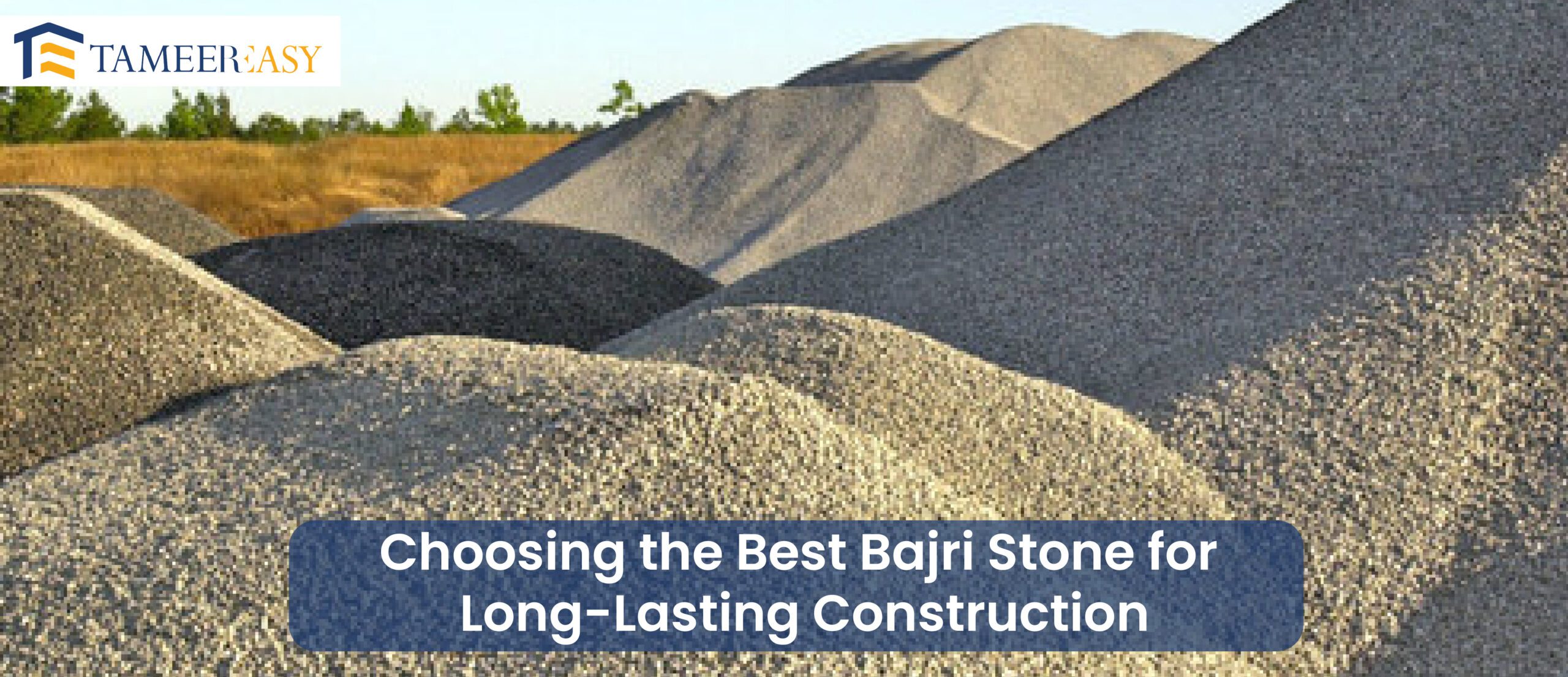
Choosing the Best Bajri Stone for Long-Lasting Construction
The construction industry of Pakistan is moving towards the implementation of more reliable, lasting, and budget-friendly building techniques among which the most significant is one material: bajri. The quality and type of Bajri stone directly affect the strength, safety, and longevity of the structure in case of home building, foundation laying, or commercial constructions.
This guide contains the most understandable, actionable, and perfectly optimized explanation of bajri; its nature, significance, and how to pick the right kind for any construction project in Pakistan down to the very detail.
What Is Bajri Stone?
Bajri is a gravel aggregate that has been crushed and is regularly used to make concrete in Pakistan as well as in the construction of crushed stone floor, under layers, and in structural reinforcement. The significantly added mixing material’s role in achieving the structure’s reliability is to confer compressive strength, stability, and load-bearing capability.
Plainly speaking, if the bajri is good, the building will be strong and also it will resist these forces for a long time.
Why Bajri is the Backbone of Strong Construction in Pakistan
Bajri stone is the leading producer in almost 60% of the concrete mixture used in modern construction. It has the ability to influence the entire construction process from its lower parts like foundations to the visible finishes; it controls the properties of the material mentioned above i.e., density, structure stability, and lifecycle strength.
The use of top-grade bajri also scores in the battle against the harsh environmental conditions of Pakistan- hot days coupled with high humidity, constant rain and moist soil, and frequent earthquakes. For the bajri price in Pakistan, visit TameerEasy and get your hands on the finest construction material under one roof.
Types of Bajri Stones Used in Construction Across Pakistan
The choice of the correct type of Bajri stone determines whether your construction becomes durable or develops long-term issues. Here are the most commonly used variants:
1. Fine Bajri
Used for plaster, tiles bedding, and smooth surfaces. It binds well and provides an even finish.
2. Medium Bajri
Used for regular concrete works, boundary walls, and slabs. This is the most commonly purchased type for general construction.
3. Coarse Bajri
Ideal for foundations, beams, columns, and heavy structural components. It provides maximum strength and reduces shrinkage.
4. Large Aggregate Bajri
Used in road bases, industrial crushed stone floors, and high-load areas where strength is the top priority.
Problems People Face When Choosing Bajri in Pakistan
Before buying bajri stone, most people struggle with:
1. Not Knowing the Right Size for the Right Purpose
Most construction issues occur because incorrect aggregate size is selected for foundations, slabs, or plaster areas.
2. Low-Quality Unwashed Bajri
Unwashed bajri contains dust and clay, weakening concrete and reducing structural durability.
3. Pricing Variations Across Cities
Because of supply sources and distance to quarries, prices differ across Pakistan, confusing buyers.
4. Unreliable Local Suppliers
Many buyers end up with inconsistent quality because suppliers mix low-grade bajri with standard material.
5. No Understanding of Strength Standards
Without understanding crushing strength, density, or mix ratios, buyers often invest in weaker materials unknowingly.
How to Select the Best Bajri Stone for Your Project
Step 1: Identify Your Construction Requirement
Different components require different bajri sizes:
- Foundations and beams need coarse bajri
- Slabs need medium bajri
- Finishings need fine bajri
Without matching size to requirement, concrete loses strength.
Step 2: Check for Purity
Inspect for:
- No dust or mud
- No flaky crushed stones
- Uniform sizes
- Hard, angular edges
Pure bajri ensures strong bonding with cement and sand.
Step 3: Understand Quality Indicators
Quality bajri stones should have:
- High crushing strength
- Low water absorption
- Consistent grading
This ensures durability under Pakistan’s climate.
Step 4: Choose the Right Source
Always buy from established quarries rather than mixed truckloads. It eliminates inconsistency and contamination.
Step 5: Estimate Quantity Accurately
Over- or under-ordering bajri causes delays, wastage, and budget issues. Follow accurate calculations based on structural drawings.
Step 6: Compare Bajri Rate in Pakistan
Prices vary depending on quarry distance and supply availability. Check updated rates before purchasing.
Step 7: Check Delivery Weight
Always verify the weight of each truck or dumper, as under-loaded supplies are a common issue in the local market.
How Bajri Stone Quality Influences Construction Lifespan
Buildings with poor-grade bajri face issues like:
- Weak foundations
- Concrete cracks
- Moisture penetration
- Uneven load distribution
- Reduced structural life
High-quality Bajri stone, on the other hand:
- Improves compression strength
- Enhances bonding with cement
- Reduces shrinkage
- Supports structural integrity in earthquakes
- Extends lifespan by decades
These benefits become more essential in Pakistan where weather, soil, and seismic zones demand stronger material selection.
How Bajri Stone Is Produced: From Quarry to Construction Site
The journey of bajri involves:
- Quarry blasting to extract rock
- Crushing through powerful machines
- Size screening
- Washing to remove dust
- Transportation to markets
Each stage affects quality. Skipping washing or mixing different aggregates decreases performance significantly.
Environmental and Structural Impact of Bajri in Pakistan
With rapid urbanization, responsible bajri sourcing matters. Quality bajri reduces concrete wastage, enables efficient mixing, and ensures long-term safety standards in residential and commercial structures.
Uses of Bajri Stone in Modern Construction
Bajri is used in:
- Foundations
- Roofing
- Slabs
- Boundary walls
- Road construction
- Crushed stone floor
- Bridges and infrastructure
Its versatility makes it essential for nearly every construction project nationwide.
Understanding Demand for Bajri in Pakistan
Demand is increasing due to:
- New housing schemes
- Road rehabilitation projects
- Private home construction
- Commercial developments
This rising demand also affects bajri price in Pakistan and availability across major cities.
Buyer’s Checklist Before Purchasing Bajri
Before purchasing, confirm:
- Grade and size
- Purity
- Delivery quantity
- Supplier credibility
- Updated market rate
- Intended construction use
This checklist saves time and prevents costly mistakes during construction.
Where to Buy High-Quality Bajri Stone in Pakistan
Look for suppliers with:
- Transparent sourcing
- Consistent material quality
- Proper washing and screening
- Reliable delivery systems
If you are searching for gravel and crushed stone suppliers near me, select vendors who provide verified and graded aggregates. Visit the TameerEasy website today to get high quality bajri at the best market rate.
Quality Bajri for Stronger, Safer, and More Durable Structure
Bajri has been and still is one of the most important materials in the construction sector of Pakistan. Selecting it the right way, it will augment the strength, durability, and longevity of the structure. Obtain the purity and grading certification, and do the above-mentioned steps. If construction longevity is your goal, then the first step is to select the right bajri-as strong buildings are built with strong materials.
Frequently Asked Questions
- What is the best type of bajri for foundations?
Coarse bajri is ideal for foundations because it provides higher compression strength and stability.
- Does washed bajri really improve concrete quality?
Yes, washed bajri eliminates dust and clay, allowing cement to bind properly and increasing structural durability.
- Is local market bajri reliable?
It can be, but only when purchased from verified suppliers. Unverified vendors often mix lower-grade material.
- How do I guess the quantity of bajri needed?
The amount required is determined by the structural drawings, area of the slab, and the concrete mix ratios. Always speak to your contractor or engineer for advice.
- Why does each city have different prices for bajri?
The main reasons for different prices are the distance to the quarry, cost of fuel and availability of transportation.